
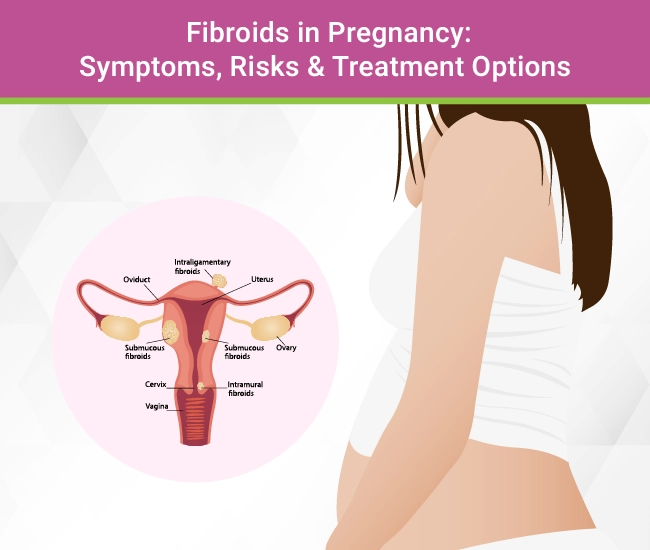
Have you ever experienced a sharp pain in your back, leg or the lower part of your uterus? While you could associate this pain with your pregnancy, it could be due to fibroids. Studies indicate that around 10% of women have experienced fibroids at least once during their pregnancy. And while fibroids are non-cancerous, they can lead to complications such as preterm labour and the functioning of your placenta. This article aims to inform you about the symptoms, risks, treatment options, and a few practical tips to treat fibroids in pregnancy. First, let’s try to understand what fibroids are.
Fibroids are non-cancerous growths that appear as lumps inside the wall of your uterus. The location further helps to understand the type of fibroids. Some commonly recognised fibroids include intramural, submucosal, subserosal and pedunculated fibroids. Hormones such as progesterone and oestrogen play a vital role here. An important tip to note here is that not all fibroids result in cancer.
Not all women may experience the same symptoms during their pregnancy. Below are some symptoms that you may experience due to fibroids in your pregnancy:
Due to their location in the lower part of your uterus, they create noticeable pressure in that region. This discomfort can further increase in the second or third trimester. When not treated, it can cause trouble even in simple movements such as walking and standing for a long period. Read our blog to know more about the treatment options available for chronic pelvic pain.
When fibroids grow at the back of your uterus, they could come in contact with the sciatic nerve. This results in a pain that feels sharp or electric in nature. Most fibroids lead to an increase in the weight of your uterus. This results in a dull but constant pain in your back.
The growing fibroid size affects your bladder’s capacity to urinate. You may feel the urge to urinate frequently. Nighttime urination may also increase. While this may feel trivial, it can lead to burning, pain or urine leakage.
Large fibroids can create additional discomfort. When these fibroids are 5-7 cm, they press against your spine region, leading to lower back pain. In certain cases, it can also lead to inflammation or fibroid degeneration.
Depending on various factors, risks due to fibroids can differ. Some common risks associated with fibroids in pregnancy include:
Complications such as fibroid degeneration become common due to large fibroids. This is because the fibroids receive a low supply or high blood supply during pregnancy. Large fibroids are usually more frequent in the second or third semester. Patients often describe this pain as sharp and sudden in nature.
Large or multiple fibroids increase the risk of preterm labour. This is because the fibroids irritate the uterine muscles, which leads to early contractions or a feeling of tightness in your abdominal region. Consult an obstetrician to understand the ultrasounds or medications required.
Although not very common, fibroids in pregnancy can affect the functioning of the placenta. Placenta previa and placenta abruption are two conditions you need to be careful about. This is because they can cause vaginal bleeding, a reduction in oxygen supply and trouble with foetal growth.
Treatment for fibroids during post-delivery depends on the severity of your symptoms. Based on your plan for future pregnancies, these treatment options can be suggested:
For pain relief, medicines such as NSAIDs could be prescribed. Options such as birth control pills can help to reduce vaginal bleeding caused due to fibroids in pregnancy. Other medications to manage hormonal changes can also be prescribed. Check this article by NHS UK to know more options for pain treatment during pregnancy. In case the medicines do not work, these surgical options can be recommended by your doctor:
Your gynaecologist can suggest myomectomy for fibroid removal. This procedure is usually recommended for women who are planning their future pregnancies. Along with relieving your symptoms, myomectomy can also help to preserve your fertility. Most patients report an improvement in the quality of their lives after this procedure. Some commonly performed myomectomy types are laparoscopic myomectomy, hysteroscopic myomectomy, and open myomectomy.
Hysterectomy means removal of uterus, it often becomes a choice when other options don’t work. Not only does hysterectomy provide a permanent solution for fibroids, but it also provides relief for concerns such as heavy bleeding, pelvic pressure and pain. Based on the size and location of fibroids.
For more information, we recommend you check our services for fibroid treatment.
Here are some practical ways we suggest that will help with fibroids during pregnancy:
Ultrasounds are a great way to monitor fibroids in pregnancy. Details related to growth, pressure effects and position of fibroid can be noted. Timely intervention usually prevents your symptoms from worsening further.
A warm compress is an easy way to deal with fibroids in pregnancy. Just be sure not to overdo this. Even 10-15 minutes of a warm compress would be enough.
Dehydration can further increase uterine contractions. Drinking enough water can help reduce abdominal discomfort in some cases.
Gentle movements such as walking, stretching or yoga can be done and it will not harm the outcome of pregnancy with fibroids.
While navigating how to treat fibroids may seem confusing, it doesn’t have to be. With timely guidance, treating fibroids is quite easy. Here are a few things that your gynaecologist can help you with:
Take note of any drastic changes in your body during pregnancy. A gynaecologist will help you understand if the reason behind these changes is due to fibroids or some other reason.
Based on factors such as the size and location of your fibroids, your gynaecologist can recommend the safest mode of delivery. For a smooth labour progression, we recommend that you check our early pregnancy care services.
If you have a history of fibroids, a review of previous records becomes essential. By assessing your condition, clear expectations can be set for the treatment. For instance, the old fibroids could require modified care.
Several appointments can be suggested by your gynaecologist to deal with fibroids during pregnancy. By following a clear schedule, both the mother’s and the baby’s health can be safeguarded.
With regular monitoring and guidance from your gynaecologist, treatment of fibroids in pregnancy is possible. And while tips such as warm compresses, hydration, a balanced diet and gentle movements can help with your symptoms, treatment options are considered better. We recommend you consult Dr Shreya Prabhoo for the treatment of fibroids. From medications to minimally invasive procedures such as laparoscopic myomectomy and hysteroscopic myomectomy, we provide personalised plans at our clinic in Andheri East. Consult Dr Shreya Prabhoo, an expert gynaecologist in Andheri, to develop a structured plan that provides treatment for fibroids with utmost confidentiality.
 Dr. Shreya Prabhoo (MBBS, DGO, DNB, MRCOG, FICOG, MNAMS) is a highly respected Consultant Obstetrician and Gynecologist based in Mumbai.
Read More
Dr. Shreya Prabhoo (MBBS, DGO, DNB, MRCOG, FICOG, MNAMS) is a highly respected Consultant Obstetrician and Gynecologist based in Mumbai.
Read More
Copyright © 2026. All Rights Reserved. Made By Capsicum.
Dr. Shreya Prabhoo Technical Support
Need guidance on women’s health, pregnancy, or gynecology treatments?
Chat with Dr. Shreya’s team on WhatsApp for appointment booking and expert advice.
WhatsApp Us
🟢 Online | Privacy policy
WhatsApp us